
Brevard Previous-Resident Eras
No single record lists everyone who lived at a Brevard County house. The current parcel card supplies a sound starting point, and the deed index moves owner by owner into the past. Occupants who did not own the land may appear in Hill-Donnelly reverse directories, population census schedules, newspapers, or probate papers. Each source answers a different question, so a reliable house history records both the source date and whether it proves ownership, occupancy, or merely an association with the address.
| Brevard source | Verified span | Access point | Evidence supplied |
|---|---|---|---|
| Official Records online | January 1, 1981 to present | Clerk Acclaim search | Grantors, grantees, dates, legal descriptions, and public images |
| Earlier deed books | Before 1981 | Clerk branches and archival indexes | Older transfers and book-page references |
| Hill-Donnelly reverse directories | 1969-1985, selected later years through 2006 | Brevard County Libraries | Listed occupant or phone by address |
| Federal census | Public schedules through 1950 | NARA and library databases | Named households at an enumeration address |
| Florida Star | 1880 to about 1917 | Library of Congress and UFDC | Residents, probate notices, business, and social news |
| Permits and Sanborn maps | System or town edition dependent | County, cities, LOC, and local archives | Work dates, building form, use, and earlier street labels |
For a recent transfer, start online. For a mid-century household, begin with the reverse directory nearest the target year and then confirm the owner in deeds. Earlier searches often depend on census schedules and newspapers. Brevard County Libraries provides the local bridge when a web search ends, while exact pre-1981 deed references should go to a Clerk branch or its research and copy channel.
Start With Brevard's Parcel Card
The Brevard County Property Appraiser Real Property Search connects a site address to the current owner, account number, parcel identifier, legal description, taxing districts, improvements, exemptions, and displayed sales history. Save the legal description and every instrument or book-page reference. Those details let a search survive a misspelled owner name or an address that changed.
Read the card with care. The situs address identifies the land or building. The mailing address is where the tax notice goes. Matching addresses and a homestead exemption can support owner occupancy, but neither creates a list of all past residents. A renter, relative, or other household member may never appear on the property roll. Year-built data and sketches help date the structure, while transfer rows point toward the next deed.
Brevard Deeds Cross Two Systems
The online Brevard Clerk Official Records index and available statutory images begin on January 1, 1981. That date creates a clear break in previous-resident research. Acclaim can be searched by party name, book and page, instrument number, legal description, date range, and document type. The Clerk recommends the form LAST, FIRST, fewer terms, and spelling variants because names are indexed as presented.
At the cutoff, the trail is not lost. Move to branch index books, microfilm, or a focused copy request with the last known book-page and legal description. Branch records are the official public records. Web images are a convenience, and some protected record categories are not displayed openly. Public index access is free; the research notes list ordinary copies at $1 per page and certification at $2 per document.
The indexed instrument can also supply an execution date as well as its recording date. Keep both. A deed signed earlier but recorded later can otherwise place a transfer in the wrong order, especially when several instruments affect the same parcel within a short span.
Walk Brevard's Deed Chain Backward
A deed chain follows transfers of the same land. Work backward from the known parcel instead of searching every person who shared the street name. A legal description, such as a subdivision, block, and lot, is often the best match key. It stays tied to the land when a road is renamed, a house number shifts, or a postal community changes.
- Open the BCPAO card. Copy the current owner, purchase row, legal description, parcel account, and recording reference.
- Open the purchase deed in Acclaim. The buyer is the grantee, and the seller is the grantor.
- Search that seller as a grantee before the sale date. Narrow with deed type, date, and legal description.
- Repeat the seller-to-buyer link. Record instrument numbers, book-pages, dates, and name variants at each transfer.
- When the online trail reaches 1981, take the last exact reference to a Clerk branch index or microfilm source.
- Grantor
- The person or entity transferring an interest in the land.
- Grantee
- The person or entity receiving that interest.
- Chain of title
- The linked sequence of recorded transfers for one parcel.
- Legal description
- The recorded land identity, often a lot and block or another surveyed description, rather than a mailing label.
Deeds prove a recorded interest, not who slept in the house. Keep a second timeline for occupancy. A spouse may appear on one deed but not another, and a trust or company can hold title while people occupy the property. Use each name as a lead, then test it against sources arranged by address.
Brevard Previous Residents Between Censuses
Hill-Donnelly's entire-county criss-cross directory is Brevard's strongest address-first shelf source. The verified run covers 1969 through 1985, 1987 through 1989, 1991 through 1999, 2001, 2002, and 2004 through 2006. These books search by phone number or address, not by name. Choose the closest held year, find the street and house number, and note nearby numbers as a check against a changed address.
Then pair the directory result with a federal census year. The 1950 census is the latest public population schedule under the 72-year release rule. NARA exposes 37 Brevard enumeration districts for that census, including descriptions and maps. A directory can place a listed adult between census years; the census may show the broader household. Neither should be forced to fit when the names differ.
- Choose the known town and nearest available directory year.
- Record the exact address entry and the adjacent house numbers.
- Locate the address in the matching census enumeration district and inspect the schedule.
- Compare names with the deed-owner timeline, then note conflicts as unresolved.
Search Melbourne and Eau Gallie
Eau Gallie and Melbourne consolidated in 1969. A household may therefore move between catalog headings, newspaper place names, or directory labels without moving at all. Search both names for prior residents near the former boundary, and check broad Melbourne-area directories that include nearby beach and mainland communities. The legal description and parcel number provide a firmer bridge than the city label.
The same care applies countywide. Brevard's historic territory was once far larger, and modern postal names do not always match city limits. An older Cocoa, Titusville, Melbourne, Palm Bay, or beachside reference should be read in the geography of its own date. Do not treat a modern mailing city as proof that the same government kept an old permit or address record.
Date a Brevard Building
Past residents make more sense when the structure itself has a timeline. BCPAO lists improvement details and a year built where present. County permit systems cover unincorporated Brevard and Grant-Valkaria from 1990 forward, split between a legacy search for 1990 through 2002 and BASS or Accela from 2003 forward. Most cities keep separate permit systems, so first confirm the parcel's true jurisdiction in GIS.
Sanborn fire-insurance maps add footprints, uses, construction clues, and old street labels for selected towns and editions. The Historical Commission has microfilmed maps for Cocoa, Eau Gallie, Melbourne, Melbourne Beach, Rockledge, and Titusville. The Library of Congress Sanborn collection is another place search. These maps do not list occupants, but they can show whether a building existed when a directory named someone at that address.
Brevard Record Images Have Limits
The Clerk explains which historical images remain available through its authenticated Official Records View. The public index may still name parties even when a protected image is removed from open Internet display. That distinction matters when a previous-resident trail reaches family, juvenile, probate, military-discharge, or death-certificate material.
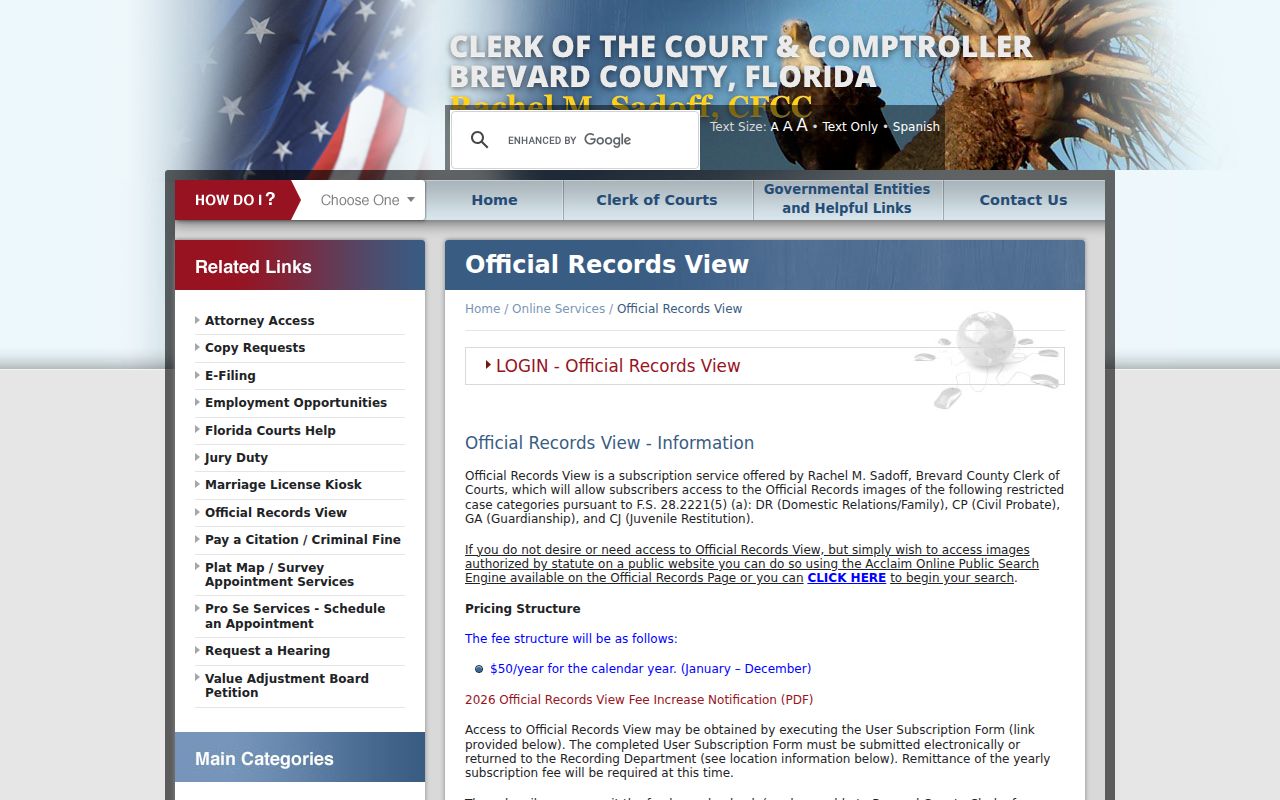
An index hit is still a lead, not a license to bypass a restriction. Ask the custodian what can lawfully be supplied, and use unrestricted deeds, parcel cards, directory pages, and newspaper notices to continue the house history.
Close Brevard's Previous-Resident Trail
Owners are only one layer. The reverse directories and census schedules can place listed occupants at an address, including some people who never held title. The Brevard County Libraries genealogy rooms offer directory volumes, local newspapers, courthouse microfilm, and database access. Detailed collection years and shelf use are covered on the Brevard County city directory page.
For a deceased owner or occupant, probate, an obituary, and cemetery records may connect heirs, relatives, and later addresses. FamilySearch catalogs Brevard probate records from 1877 through 1926 on six microfilm reels, with wills volumes covering 1877 through 1905. The Florida Star adds probate, legal, obituary, and social notices from 1880 to about 1917. Verify newspaper details against the Clerk file or a vital record when possible, and never assume two people with the same name are one person.
Lawful use. Research previous residents for house history, family history, or an heir search. Florida law does not permit stalking, harassment, or harm.