
Brevard Neighbor Records by Block
Public sources describe parcels and civic ties better than private households. BCPAO maps the lots, parcel cards identify recorded owners, plats explain the subdivision, and permit or code files document activity tied to an address. A lawful voter extract can show registered residence entries, but protected rows are suppressed and the county status form is not a radius search. Association records identify a legal entity and public officers, not all Brevard County neighbors who belong to it.
| Brevard source | What it contributes to a block | How to reach it |
|---|---|---|
| BCPAO Interactive Map | Touching parcels, facing frontage, lot shape, and jurisdiction | Free map and parcel popups |
| BCPAO parcel cards | Owner, mailing and site addresses, use, exemptions, and sales | Free property search |
| Florida voter extract | Public residence and precinct fields for registered voters | Formal monthly extract request; protected data withheld |
| Permit and code records | Dated projects, applicants, contractors, and cases by address | County or the parcel's city |
| Plats and association filings | Lots, roads, easements, entity status, and public officers | Clerk, BCPAO, Sunbiz, and official association sites |
| Reverse directories | Historically listed occupants arranged by house number | Brevard library shelves |
The owner line is a firm statement about the tax roll, not a current census of the home. A mailing address that matches the site address and a homestead exemption may support owner occupancy, but renters and relatives remain unlisted. Use careful labels such as “parcel owner” or “registered voter at the address.” Do not turn either into a claim about every person living there.
Define Your Brevard Neighbors First
“Nearby” changes with the landscape. Brevard County is long and narrow, split by the Indian River and Banana River lagoon system, Merritt Island, and barrier islands. A block in Titusville or Melbourne may be a regular street grid. A Port St. John cul-de-sac, beachside condo, Grant-Valkaria tract, or Palm Bay canal street needs a different rule.
For the tightest lookup, include each parcel sharing a line with the target. Add parcels across the road only when their frontage faces the home. In a condo, inspect the parent parcel and unit records rather than counting the whole complex as one household. This definition can be written down before names are gathered, which prevents the search from expanding into a broad and intrusive sweep.
Map Brevard Neighbors Parcel by Parcel
The BCPAO Interactive Map supports an exact adjacency method. Its verified controls include Account and Go, Quick Search, parcel popups, zoom, pan, aerial and street context, and layers for subdivisions, blocks, parcels, condos, labels, and jurisdiction. No public radius or buffer control was verified. Visible parcel boundaries are the dependable method.
- Search the target address or its seven-digit account number, then zoom until parcel lines and labels are clear.
- Click the target. Save its account and use the popup or Details control to open the parcel card.
- Click every polygon touching the target. Open each card separately, rather than reading a name from a map label alone.
- If the search includes the far side of the road, add only parcels whose frontage faces the target under the chosen rule.
- Record owner and site data as separate fields. Note possible owner occupancy only when the card supports it.
This method stays focused on the immediate block. A full named-road project belongs in the Brevard County street directory, which follows address records along the whole street.
Read Brevard Parcel Clues Carefully
A BCPAO card can show the owner name, owner mailing address, site address, account and parcel identifiers, legal description, municipality or taxing districts, land use, values, exemptions, building details, and sales references. These fields help distinguish two nearby parcels with similar addresses. They also reveal when the tax bill goes somewhere else.
- Parcel
- A mapped unit of land with its own county account.
- Situs address
- The physical location assigned to the parcel or improvement.
- Mailing address
- The address used to send the owner's tax or contact mail.
- Plat
- A recorded map that lays out subdivision lots, blocks, roads, and easements.
A vacant or corner parcel may have no site address, and confidential records may produce a limited result. BCPAO also warns that E911-assigned site addresses may not match the postal community. The map's jurisdiction layers, not the mailing city alone, help decide which government holds permit or code records.
Brevard Voter Data Is Not a Directory
Florida voter-registration information is generally public under sections 97.0585 and 98.211, but key fields never become public. Social Security numbers, driver-license or state-ID numbers, and the application source are withheld. Address Confidentiality Program participants and other protected voters receive further safeguards. A missing row cannot prove that no one lives at a home.
The statewide public extract has 47 fields, including split name and residence address, precinct, several districts, party, registration status, and election-participation history. It never reveals ballot choices. The current monthly extract is delivered by disk or pickup, not online or by email, and later requests may have a service fee. Brevard's voter-status form is a voter self-service tool that requires identity fields. It must not be described as an address-radius search.
Registration status needs context too. An inactive entry may reflect an address-confirmation process and is not the same as a cancelled registration. Compare the residence field with the current parcel card and newer public records before treating it as present-day block evidence. The extract uses ***Protected*** in place of protected address output, so a block count will remain incomplete by design.
Brevard Associations Offer Public Contacts
No authoritative countywide list of all Brevard neighborhood or HOA directories was found. Search by the named subdivision or community instead. Florida Sunbiz can verify an association's legal name, status, registered agent, public officers or managers, addresses, and filed annual reports. Then use the association's own site for posted meeting notices or board contacts.
| Community source | Use it for | Do not infer |
|---|---|---|
| Sunbiz entity record | Legal status, registered agent, public officers, filings | Every member or resident |
| Official association site | Board contact, public events, meeting notices | A private roster is open |
| City neighborhood page | Recognized groups and civic contacts where posted | Countywide completeness |
| Library or archive | Historic newsletters and donated club records | Current private membership |
Congregations, watches, veterans posts, and civic clubs may publish office contacts. Their private member lists stay private. Ask a library for a catalog search of donated historical material rather than seeking a current roster.
Plats Explain Brevard Blocks
A plat can explain why two homes that look close are not on the same subdivision block. It shows lot and block numbers, streets, easements, and recorded layout. Use the legal-description fields on a parcel card to search the Clerk's official records or BCPAO plat-book and page fields. This is especially useful near canals, irregular coastal tracts, condo parcels, and roads with several names.
Permit and code files add dated context. County online permit coverage starts in 1990 for unincorporated Brevard and Grant-Valkaria, while most cities maintain separate systems. County records can be searched by address or account, and public results may show status, inspections, permits, and completion documents. A Cocoa postal name does not prove that Cocoa holds the file. Confirm the parcel's city or unincorporated status first.
Map layers can sharpen that jurisdiction check. BCPAO exposes subdivisions, blocks, condos, township-range sections, water, land, parcel labels, and recent sales-year overlays. Use those layers as geographic context, then open the linked parcel card for the record itself.
Official Brevard Rolls vs Compiled Tools
Commercial neighbor tools combine many sources and may lag after a sale, merge separate households, or retain data after an opt-out. Official sources are narrower but disclose their keeper and record purpose. Use the county record to answer the exact question it was built to answer.
| Source type | Strong point | Main limit |
|---|---|---|
| Parcel GIS and cards | Current mapped parcels and assessed owners | Not an occupant roll |
| Lawfully obtained voter data | Registered residence and precinct fields | Omits nonvoters and protected rows |
| Association public records | Entity and officer contacts | Not a member directory |
| Commercial compilation | Broad lead gathering | Lag, merged households, and unclear source dates |
Confirm a name with the parcel card, deed, or custodian before relying on it. The smaller, sourced answer is often more useful than a large list with no clear date.
Protect Privacy Around Brevard Neighbors
Utility accounts, delivery data, DMV details, and private household-member lists do not become public just because an address is known. Florida's Address Confidentiality Program provides a substitute mailing address and forwarding for eligible victims of domestic violence or stalking. Section 119.071 also allows certain high-risk professionals to request protection from agencies that hold covered fields. Such protection may not erase old copied datasets, but an official record should be read with its current redactions intact.
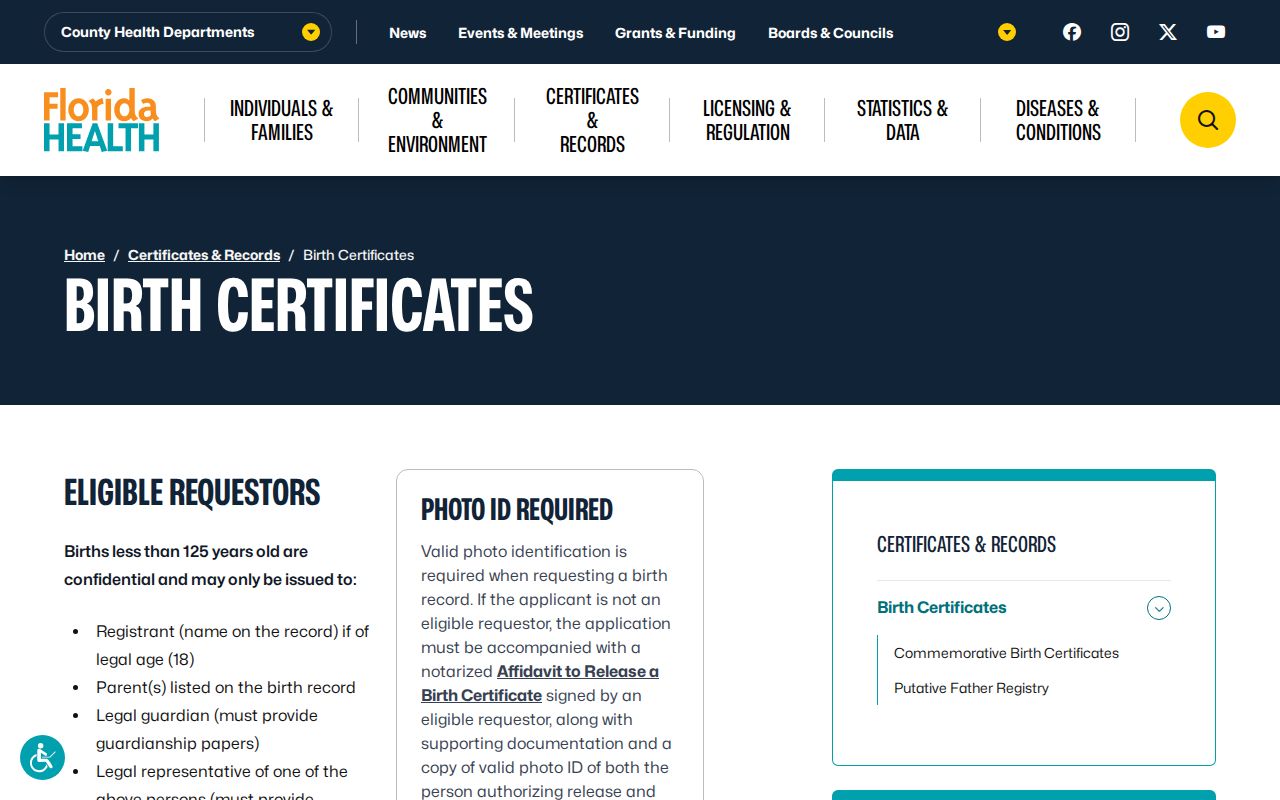
Florida's birth-certificate access rules are another clear boundary: birth records under 125 years old are confidential and available only through the state's eligibility process.
Use block records for civic curiosity, a property question, community contact, or personal safety awareness. Do not publish a broad household list or seek concealed data. Florida's stalking and cyberstalking law, section 784.048, applies even when an initial fact came from a public index.
Lawful use. Learn about the block without tracking or intimidating a person. Public access never permits stalking, harassment, or harm.